Dyslexia Support
Dyslexia Tutoring
Specialized, one-on-one support for children with dyslexia, using the structured, multi-sensory Orton-Gillingham approach that was built for exactly this.
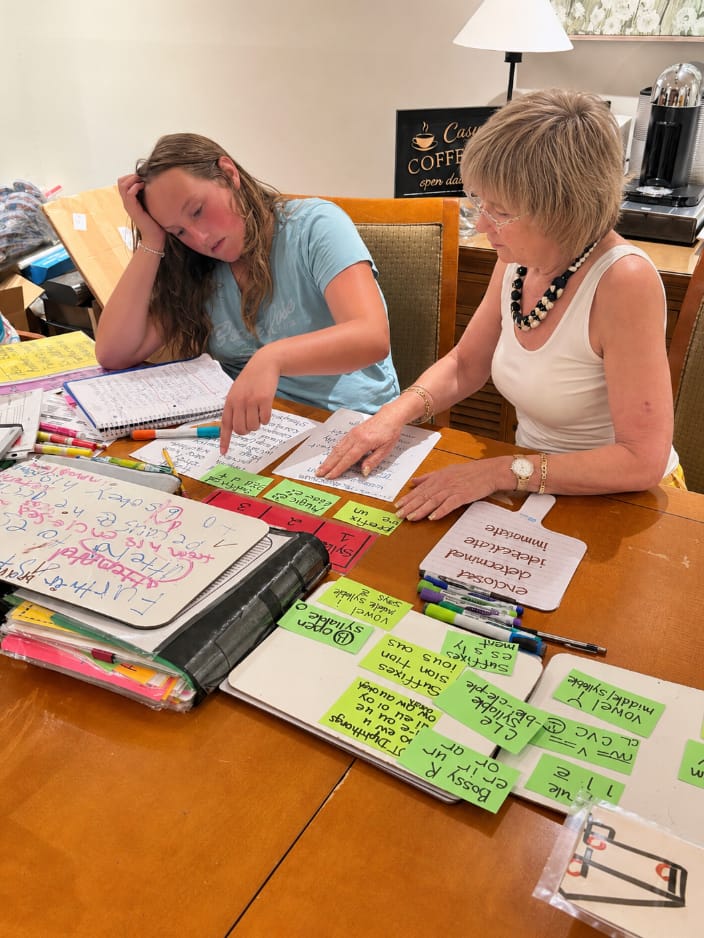
Understanding dyslexia
Dyslexia is a common, brain-based difference that makes it harder to connect letters to their sounds. It has nothing to do with intelligence or effort, and children with dyslexia are very often bright, creative, and hard-working. What they need is the right kind of teaching.
With structured, explicit instruction, children with dyslexia can absolutely learn to read well. I have taken students from being emergent readers to reading above grade level, and I have watched their confidence transform along the way.
How I support dyslexic learners
The Orton-Gillingham approach is the gold standard for dyslexia because it teaches the structure of language directly and multi-sensorily. Each concept is introduced clearly, practiced through sight, sound, speech, and movement, and reviewed until it is genuinely secure.
- Explicit, systematic phonics that leaves nothing to guesswork
- Multi-sensory practice that builds strong, lasting pathways
- Careful review so hard-won skills are not lost
- Patience and encouragement at every single step
A focus on confidence
Children with dyslexia often arrive discouraged after years of struggle. Rebuilding their belief in themselves is just as important as building their skills, so I design every lesson so that your child experiences real, earned success.
Why families choose this
Built for dyslexia
Orton-Gillingham was developed specifically for dyslexic learners.
Proven results
Students moved from emergent to above-grade-level reading.
Strengths-based
Teaching that honors how your child’s mind actually works.
Whole-child care
Confidence and skills rebuilt together, side by side.
The 5 Components of Reading
Every lesson is built around these five pillars, woven together with multi-sensory Orton-Gillingham instruction.
Decoding
Breaking words into sounds and blending them back together.
Fluency
Reading smoothly, accurately, and at a comfortable pace.
Vocabulary
Building the word knowledge that unlocks meaning.
Reading Comprehension
Understanding, remembering, and explaining the text.
Written Expression
Putting thoughts into clear, organized writing.
Common Questions
My child hasn’t been formally diagnosed. Can you still help?
Absolutely. A formal diagnosis is not required to begin. If your child shows signs of a reading struggle, structured literacy instruction will help regardless of a label.
Is it too late to help my older child?
It is never too late. While early intervention is ideal, the Orton-Gillingham approach helps struggling readers at every stage from Pre-K through 6th grade.
Will this replace what my child gets at school?
My tutoring complements school instruction with intensive, individualized support that a classroom simply cannot provide one-on-one.
How long until we see progress?
Every child is different, but consistent, structured instruction produces steady, visible growth. We will set realistic goals together and track progress over time.
What families and colleagues say
Ms. Keppler is one of those teachers that challenges students academically. I have been impressed with Patricia’s flexibility in using a variety of multi-sensory methods to teach struggling readers.
Boblyn Dobbs I am a parent who has known Patricia Keppler for the last 2 years. She has provided service for my son in decoding, spelling, reading, vocabulary, and solid study habits. Patricia is punctual and has implemented a wide range of methodologies to ensure that my child is successful in literacy.
Regina Vortman Patricia is a person of genuine care and has a passion to work with children to help them achieve their fullest potential. She is dedicated to helping the students.
Candace Galvez
Ready to help your child read with confidence?
The first step is a free consultation. Call or email Patricia to talk about your child, with no pressure and no obligation.