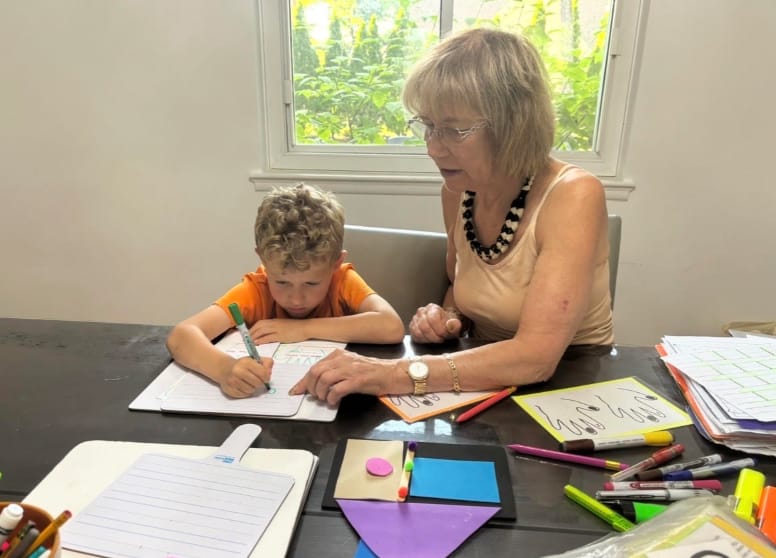
Reading trouble rarely announces itself. It hides in a reluctant reader, a sudden stomachache before school, a child who would rather do anything than open a book. As a reading specialist, I have learned to notice the quiet signals long before a child is labeled “behind.” Here are seven signs I watch for, and what they can mean.
1. Trouble connecting letters to sounds
One of the earliest signs is difficulty identifying the letters within a word and the sounds they make. A child might know the alphabet song but stumble when asked what sound the letter “b” makes, or which letters make the word “cat.” This is the foundation of reading, and when it wobbles, everything built on top of it does too.
2. Confusing the order and sequence of letters
Children who are struggling often mix up the order of letters, reading “was” as “saw” or writing letters out of sequence. This isn’t carelessness — it reflects how the brain is processing print, and it responds beautifully to structured, explicit instruction.
3. Difficulty blending sounds into words
Phonemic awareness — the ability to hear individual sounds and blend them into a whole word — is a strong predictor of reading success. A child who can say the sounds /c/ /a/ /t/ but can’t blend them into “cat” is showing a sign worth paying attention to.
4. Adding or dropping sounds
Watch for a child who inserts sounds that aren’t there, or omits sounds while reading and writing. They might read “stop” as “top,” or write “bump” as “bmp.” These slips point to gaps in phonological processing.
5. Reading without expression
Fluency isn’t just speed — it’s reading with expression, intonation, and natural inflection. A child who reads in a flat, word-by-word monotone is often spending so much energy decoding that there is nothing left for meaning.
6. Struggling to explain what they read
If your child finishes a page but can’t tell you what happened or explain the key points, comprehension is the concern. Sometimes this stems from decoding difficulties; sometimes it’s a comprehension gap on its own. Either way, it’s addressable.
7. Avoidance and frustration
Finally, watch the emotions. Tears at homework time, “I’m dumb,” or a child who suddenly hates a book they once loved — these are signs that reading has become a source of stress. That emotional weight is real, and it’s one of the first things I work to lift.
Every one of these signs is a starting point, not a verdict. With a structured, multi-sensory approach, children move past these struggles all the time.
What to do next
If you recognized your child in this list, take a breath — you’ve already done the hardest part by noticing. The next step is a conversation. A structured, multi-sensory Orton-Gillingham approach targets each of these areas directly, and progress often comes faster than parents expect.
- Trust your instincts — you know your child best
- Look for patterns, not one-off mistakes
- Reach out for a professional perspective before frustration builds
Wondering if your child needs this kind of help?
A free consultation is the easiest way to find out.