Parents hear the phrase “multi-sensory” and often picture something vague — maybe colorful flashcards or a song. In the Orton-Gillingham approach, it is far more specific and deliberate than that, and it is one of the biggest reasons the method works so well for struggling readers.
Learning through more than one sense at a time
Multi-sensory instruction means a child sees, hears, says, and moves through each concept — all at once. When learning a letter sound, a child might see the letter, say its sound aloud, hear themselves say it, and trace its shape with a finger. Engaging several senses simultaneously creates stronger, more reliable pathways in the brain.
Why it matters for struggling readers
For a child who struggles with reading, a single pathway to a piece of knowledge is fragile. If they only hear a rule, it may not stick. But when sight, sound, speech, and touch all point to the same idea, the learning has more than one way to take hold — and more than one way to be recalled later.
- Visual — seeing the letters, patterns, and words
- Auditory — hearing and producing the sounds
- Kinesthetic — moving, tracing, and building words
- Tactile — feeling the shapes and textures of letters
What it looks like in a real session
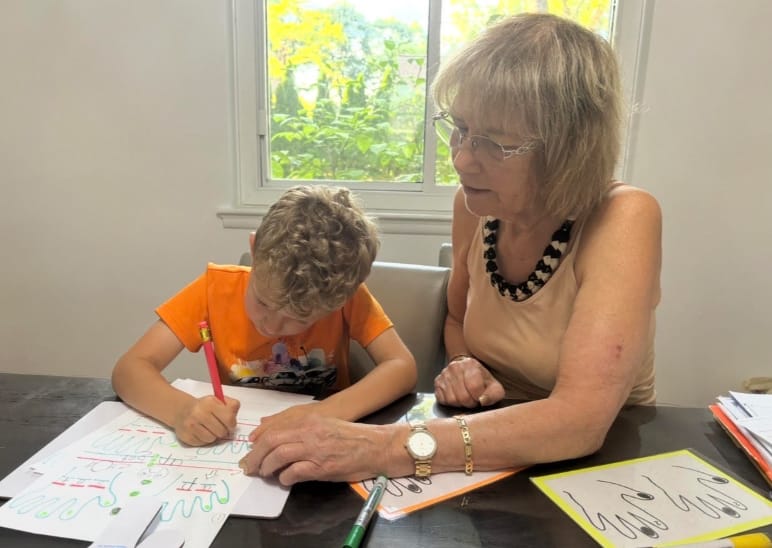
In practice, a lesson might have a child arrange letter tiles while saying each sound, tap out the sounds in a word on their fingers, or trace a spelling pattern in sand. It’s active, hands-on, and purposeful — never busywork. For children who find it hard to sit still, I also integrate purposeful movement so that focus and learning work together.
Multi-sensory learning turns reading from something a child passively receives into something they actively build.
The takeaway
When you hear that a program is multi-sensory, ask what that actually looks like day to day. In genuine Orton-Gillingham instruction, it is specific, structured, and woven through every one of the five components of reading — and it’s a big part of why children make real, lasting progress.
Wondering if your child needs this kind of help?
A free consultation is the easiest way to find out.